Article: Understanding Hormonal Rhythms Is Part of Understanding Women's Health
Understanding Hormonal Rhythms Is Part of Understanding Women's Health
Women's Health Week
Women's Health Week creates an opportunity to have a conversation that many women have waited a long time to hear.
Many women grow up learning about puberty, periods, pregnancy, and menopause. Those conversations are important, yet they rarely explain how changing hormonal rhythms can influence everyday wellbeing throughout a woman's life. As a result, women may notice changes in their energy, sleep, mood, skin, or ability to cope with daily demands without recognising that these experiences can reflect normal biological changes. [1,2]
Without that understanding, it is easy to view each change as an isolated experience rather than part of the body's natural rhythm. Women may recognise that something feels different without having the context to understand why those changes occur or how they relate to different stages of life.
Women's Health Week invites a broader conversation. Understanding women's health also means recognising how these natural rhythms shape everyday wellbeing. Bringing these rhythms into everyday health conversations can help women recognise their own patterns, make informed choices, and respond to their changing needs with greater confidence. [1,2]
Women's health education has been incomplete
Many women receive health education at key stages of life, including puberty, menstruation, pregnancy, and menopause. These conversations provide important information, yet they often focus on reproductive milestones rather than explaining how hormonal rhythms can influence everyday wellbeing. [1,2]
As a result, the connections between hormonal changes and experiences such as sleep, energy, skin comfort, emotional resilience, concentration, and recovery are not always discussed in ways that help women understand what they may notice in their daily lives.
Expanding women's health education to include these changing rhythms provides a broader understanding of how the female body functions throughout the menstrual cycle and across different life stages. That knowledge creates a stronger foundation for informed conversations, thoughtful self-care, and decisions that reflect a woman's changing biological needs. [1]
Many women never learned about hormonal rhythms
When women are not taught how hormonal rhythms influence everyday wellbeing, it becomes more difficult to recognise patterns in their own experiences. A change in energy, skin comfort, sleep, emotional resilience, or physical capacity may feel unexpected when it is viewed as a series of unrelated events rather than part of the body's natural rhythm.
Understanding these patterns does not mean every experience has a hormonal explanation, nor does it replace medical advice when symptoms are persistent, severe, or concerning. It offers context for changes that many women experience throughout the menstrual cycle and across different stages of life.
That awareness can help women approach their bodies with greater understanding. Instead of assuming that something is wrong each time they feel different, they can begin to recognise when their changing needs may reflect normal biological rhythms and respond with greater confidence. [3]
Understanding those rhythms changes how women care for themselves
Understanding hormonal rhythms encourages a different relationship with the body. Instead of expecting every day to feel the same, women can begin to recognise that their needs may change throughout the month and across different stages of life.
Some days may call for more rest, while others may support greater activity. Skin may feel comfortable one week and more sensitive the next. Energy, recovery, and emotional resilience may also shift without indicating that something is wrong.
Understanding these changes helps women respond with greater intention rather than frustration. It creates space to adjust daily habits, seek appropriate support when needed, and approach self-care with an understanding that the female body naturally changes across the menstrual cycle and different life stages. [3]
Awareness does not require perfection, and it does not mean every change has a hormonal explanation. It simply encourages women to notice their own rhythms and make decisions that reflect how they feel in the present, rather than expecting their bodies to respond the same way every day.
Body care becomes one small expression of that awareness
Understanding the body's changing rhythms can influence many everyday decisions, from how a woman approaches rest and movement to how she responds to changes in her skin or overall wellbeing. Body care can become one way of responding to those changing rhythms with greater intention.
A daily body care ritual cannot change hormonal rhythms, nor is it intended to replace medical care. Instead, it offers an opportunity to pause, notice how the body feels today, and choose care that reflects its changing needs.
Some days may call for warmth, nourishment, or a slower routine. On other days, movement, lightness, or a more uplifting ritual may feel more supportive. Responding to these changes acknowledges that the body does not have the same needs every day.
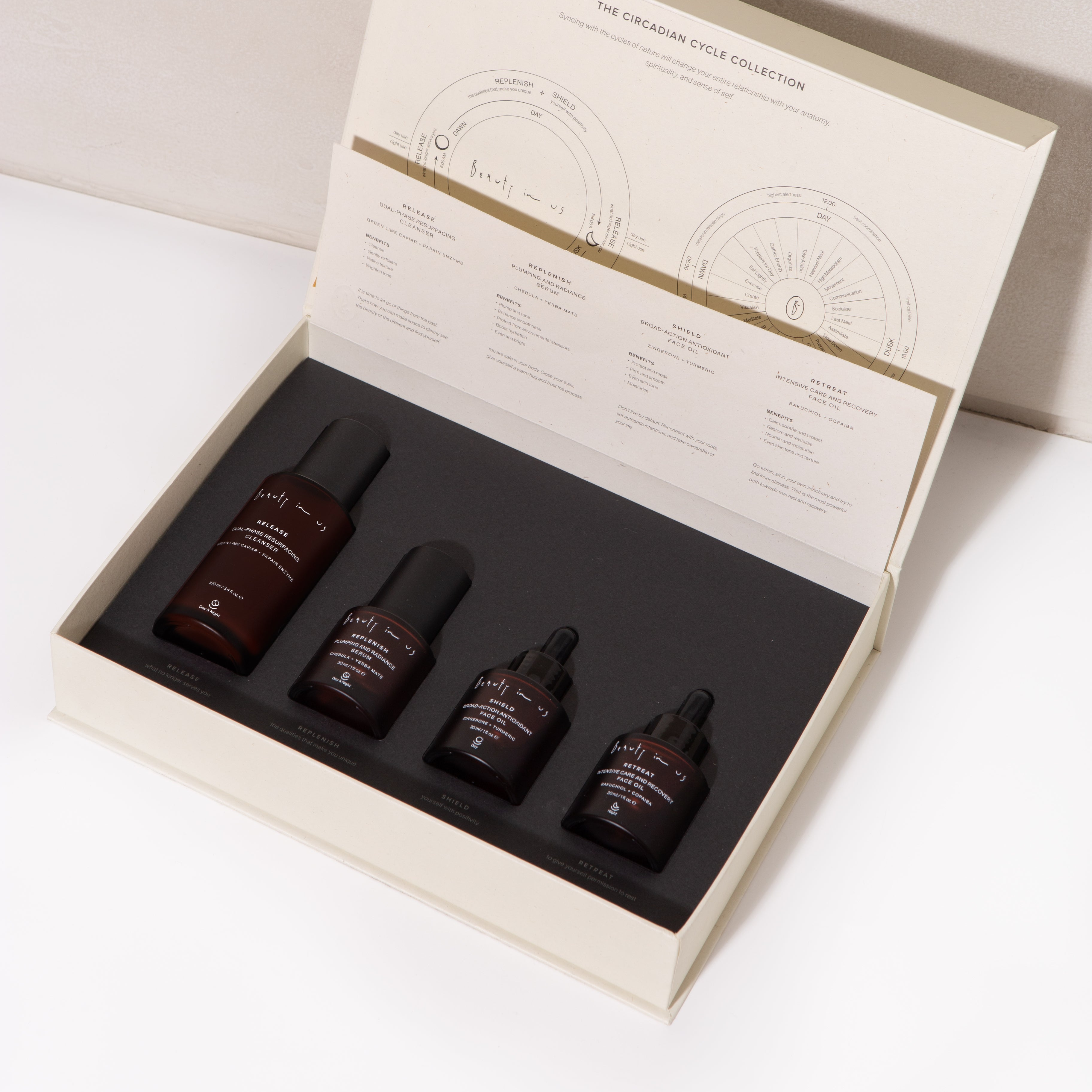
This understanding shaped the way Beauty in Us approaches body care. The Four Weeks Flow™ Collection was inspired by the changing rhythm of the menstrual cycle, with each body oil serving as a ritual anchor for a different chapter of the cycle. Rather than promising to change the body, each ritual encourages women to pause, recognise what their bodies may be asking for, and respond with care that reflects that moment. The Flow of Wisdom™ Collection reflects the transitions of perimenopause, menopause, and post-menopause. Neither collection is intended to change hormonal rhythms. They were created to acknowledge that women's biological needs change over time and to encourage body care that responds to those changing rhythms with greater awareness.
REFERENCES
- World Health Organization. Women's health.
https://www.who.int/health-topics/womens-health - Jean Hailes for Women's Health. Women's Health Week.
https://www.jeanhailes.org.au/get-involved/womens-health-week - Thiyagarajan DK, et al. Physiology, Menstrual Cycle. StatPearls.
https://www.ncbi.nlm.nih.gov/books/NBK500020/

Written by Ana Paula Maielo